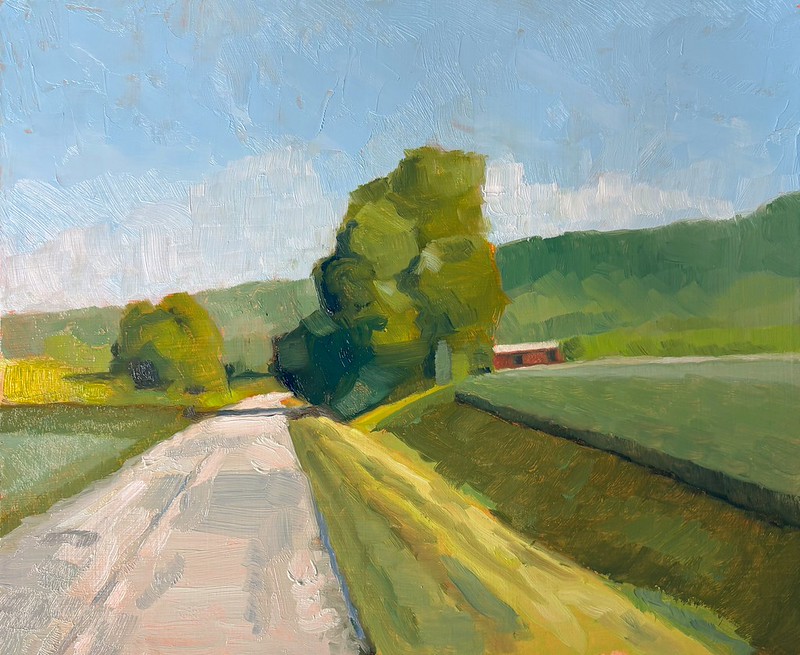
“Gestalt” is one of those annoyingly useful words that artists occasionally borrow from psychology. It’s also one of those words I avoid using in ordinary conversation because it sounds like I’m trying a little too hard.
The basic idea is simple enough, though. We tend to experience things as a whole rather than as a collection of separate pieces.
I think painters are after that feeling all the time.
The best paintings don’t ask us to admire the tree, then the barn, then the clouds, then the fence. Somehow all of those pieces come together into something that feels complete. It’s difficult to explain, but easy to recognize. Everything belongs.
That’s much harder to accomplish than it sounds.
Many painters work primarily from photographs, and photographs are incredibly generous with information. Every leaf is visible. Every brick has texture. Every shadow contains another shadow. The temptation is to include all of it.
The problem is that our eyes don’t actually experience the world that way.
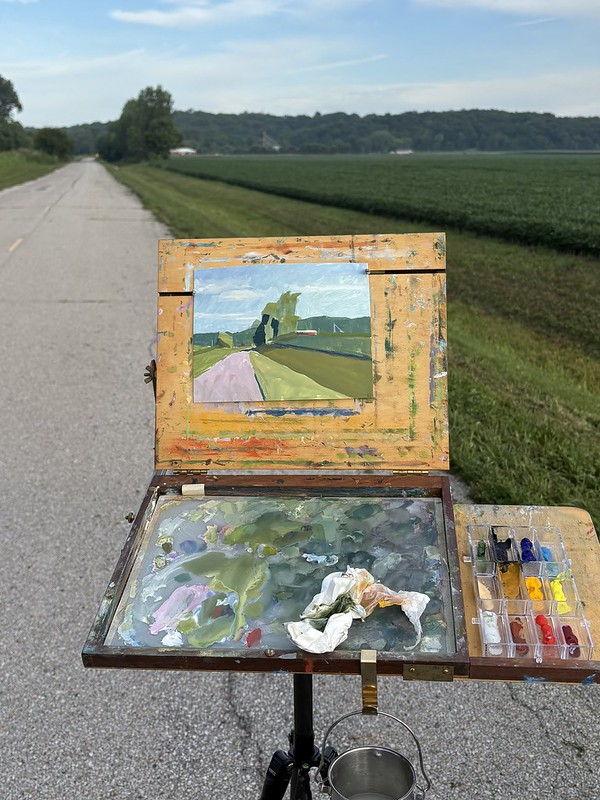
Our brains are remarkably good at filling in missing information. We recognize incomplete shapes. We complete interrupted lines. We accept suggestion where we don’t really need detail. That’s one of the quiet joys of painting. A few confident brushstrokes can often say more than careful description.
I’m a stickler for design.

To me, representational painting isn’t simply copying what’s in front of me. It’s arranging shapes, values, and edges so the viewer experiences the scene in a particular way. Every decision matters. Where does the eye enter the painting? Where does it travel? Does it linger? Does it leave too quickly?
When I come across a painting that really speaks to me, I often spend as much time studying why it works as I do simply enjoying it.
Usually it’s because the artist has carefully considered relationships. Foreground and background. Large shapes and small ones. Soft edges and hard edges. Light and shadow. The composition feels intentional without calling attention to itself.
The viewer becomes part of the experience.
Color works much the same way.
One reason I enjoy working with a limited palette is that it naturally encourages harmony. When every mixture grows out of just a handful of pigments, the colors tend to belong together before I’ve even finished the painting.
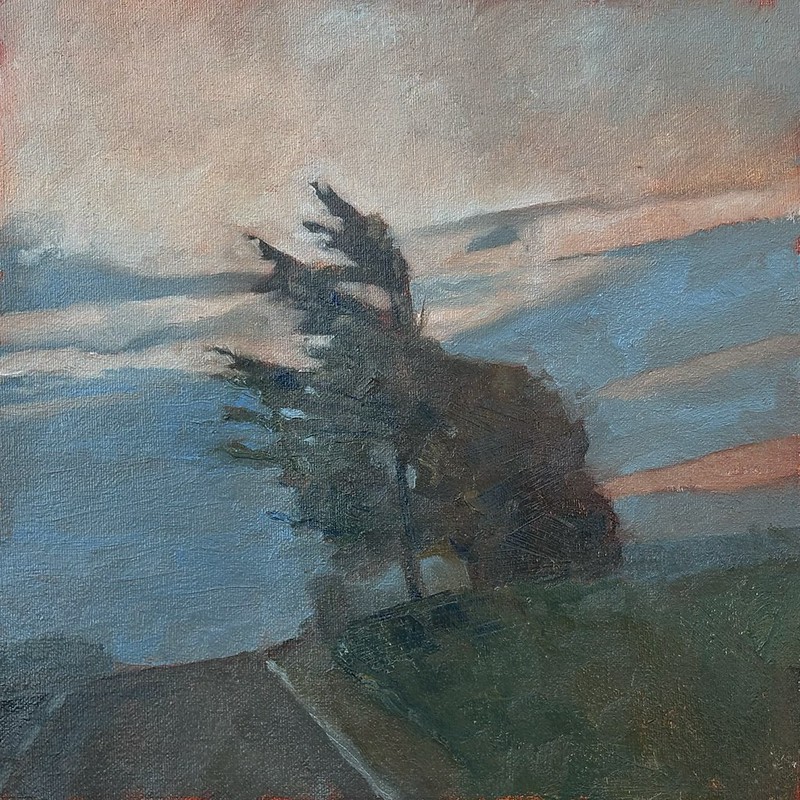
Lately I’ve been revisiting an especially restrained palette: ultramarine blue, yellow ochre, burnt sienna, and titanium white.
At first glance it seems limiting.
In practice it’s surprisingly liberating.
Instead of chasing exact color matches, I’m forced to think first about value. Is this shape lighter or darker? Does it move forward or recede? Is the relationship convincing?
It turns out that convincing values carry a painting much farther than “perfect” color ever will.
Once those relationships begin working together, color becomes less about imitation and more about communication. Now a painting can begin suggesting atmosphere, memory, or emotion instead of simply recording information.
I learned that lesson the hard way.
I remember one afternoon in college when an enormous thunderstorm rolled in. The light show was spectacular. I grabbed my paints, ran outside, and started making marks with all the enthusiasm I could muster.
My roommate watched for a while before informing me that I’d completely lost my mind.
Looking back, he may have had a point.
The painting was an absolute disaster.
Not because the storm wasn’t beautiful—it was—but because I didn’t yet have the tools to organize everything I was feeling in that moment. There was plenty of energy on the canvas, but very little unity.
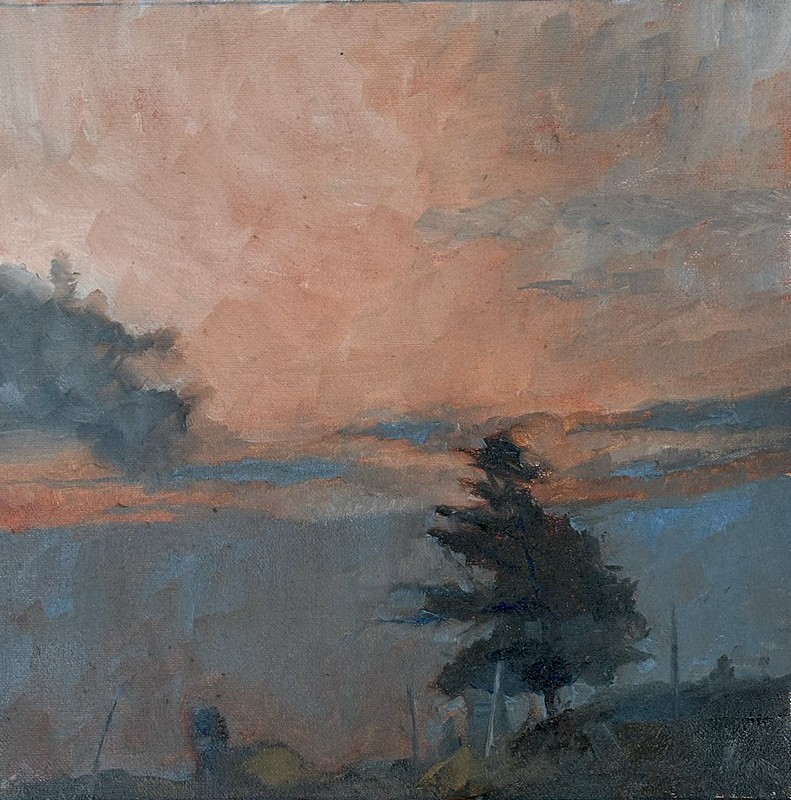
Lately I’ve found myself looking again at the American Tonalists of the late nineteenth century, as well as contemporary Tonalist landscape painters. These paintings aren’t driven by dazzling color or meticulous detail. Instead they rely on carefully controlled values, restrained color, and atmosphere. The painters understand that mood often comes from what is left unsaid as much as from what is described.
That’s a lesson I find myself returning to over and over again.
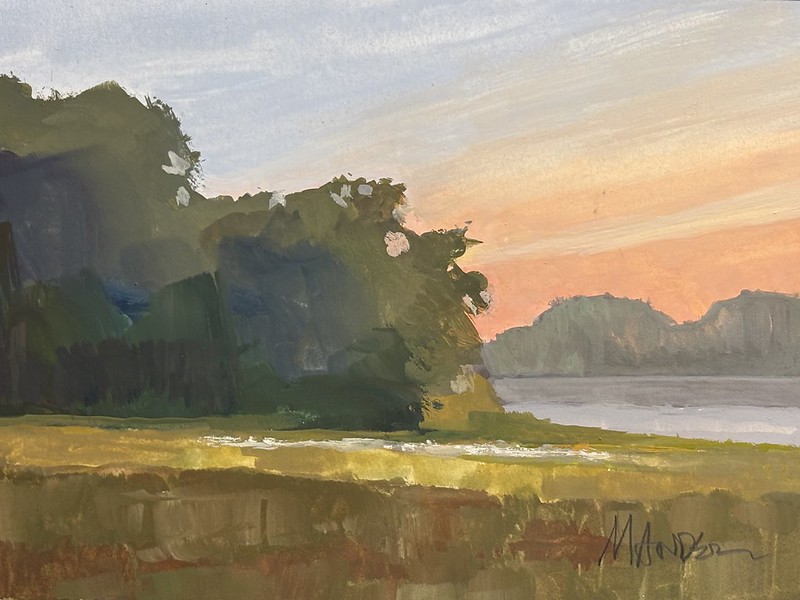
Whether I’m standing beside a gravel road in Missouri or painting an old industrial building, I’m not really trying to copy what I see.
I’m trying to make a painting where everything belongs.
When that happens—even if only once in a while—the whole becomes something greater than the sum of its parts.


Leave a Reply