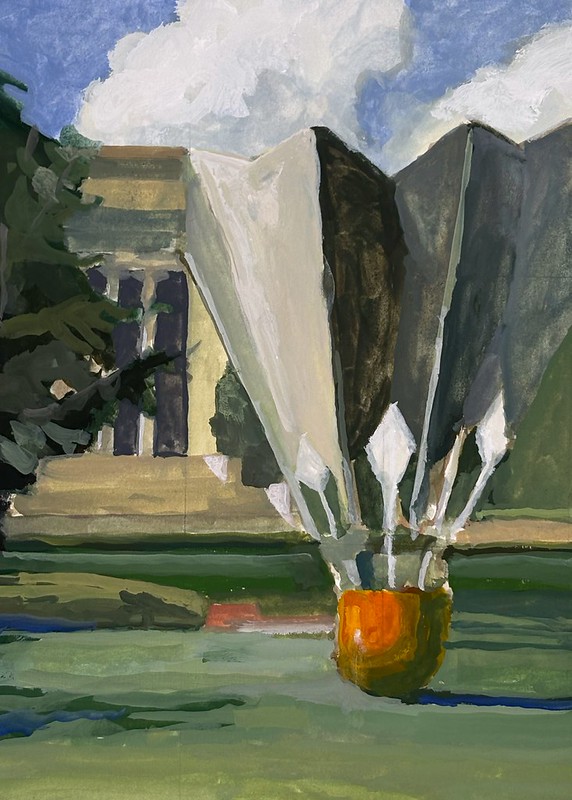
One of the unexpected pleasures of painting outdoors has very little to do with paint.
It’s the people.
Not every plein air painter enjoys working where passersby can wander over and watch. For some artists, painting in public feels intimidating. They worry about being interrupted or having someone look over their shoulder before the painting has found its footing.
I understand that feeling.
Every painting passes through what I affectionately call the “ugly middle stage”—that awkward point where everything seems to be going wrong at once. It feels like exactly the wrong moment for an audience.
Fortunately, people almost never see it that way.
Last Sunday I was painting during the Kansas City Lawn Party on the grounds of the Nelson-Atkins Museum of Art. It was one of those classic Missouri summer afternoons—hot, humid, and filled with towering clouds that looked picturesque until they unleashed a soaking rain a couple of hours later.
My original plan was to paint Rodin’s The Thinker. Instead, common sense won out. The shade beneath a row of trees looked much more appealing than standing in the open sun, so I set up to paint one of the museum’s giant shuttlecocks instead.
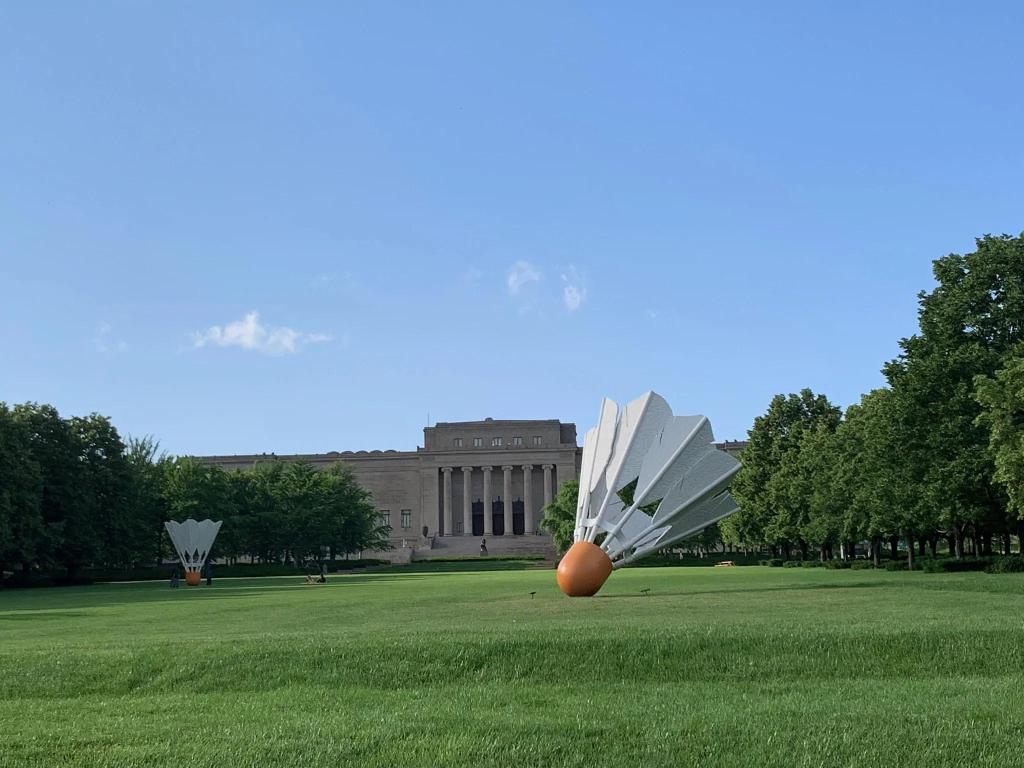
I’ve painted them before, but that’s one of the nice things about returning to a familiar subject. The light is different. The season is different. And the people are always different.
Over the next couple of hours, visitors wandered over one after another.
Some asked if they could photograph me while I worked.
“Absolutely.”
Others wanted to know how long I’d been painting. Many were surprised to learn the answer was essentially my whole life.
Quite a few had a story to tell. A grandmother who painted. A son who loved to draw. An uncle who was “pretty good at art.” Others admitted they’d always wanted to learn to paint themselves but never quite got around to it.
One gentleman simply needed directions to the museum activities tent.
Painting outdoors apparently comes with information-desk responsibilities.
Years of teaching art prepared me well for moments like these. You learn to carry on a conversation while your hands keep working. The brush never really stops moving.
What I’ve discovered over the years is that these conversations don’t distract me from the painting.
They’re part of it.
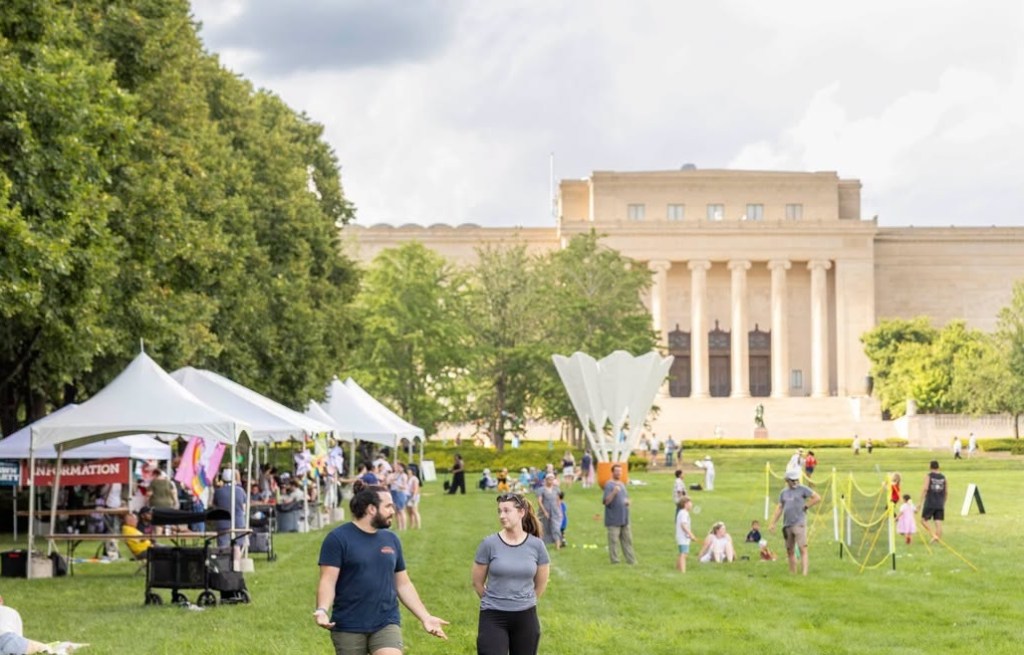
People often imagine plein air painting as a solitary activity. In one sense, it is. You’re standing alone at an easel, making hundreds of small decisions.
But you’re also participating in the life of a place. The caretaker who stops to see what you’re painting. The family walking their dog. The children who want to know how the colors are mixed. The couple eating lunch nearby. The museum visitor who pauses for a minute before continuing on.
None of them appeared in the finished painting, but somehow they all became part of the afternoon. They’re part of what it means to be there. The painting becomes more than a snapshot of a place. It becomes a memory of having shared it with others, if only for a little while.


Leave a Reply